new album "reflection & praise"

Available on apple music

home

the

musician

the

instruments

the great heritage

teaching

contact
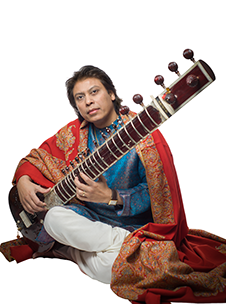
The Instruments
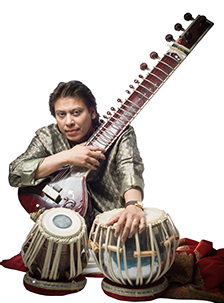
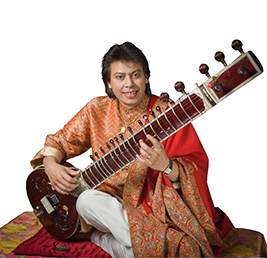
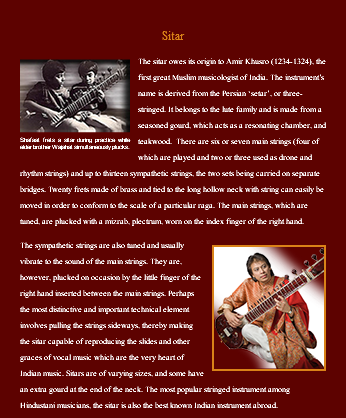
 Sitar ﷯The sitar owes its origin to Amir Khusro (1234-1324), the first great Muslim musicologist of India. The instrument’s name is derived from the Persian ‘setar’, or three-stringed. It belongs to the lute family and is made from a seasoned gourd, which acts as a resonating chamber, and teakwood. There are six or seven main strings (four of which are played and two or three used as drone and rhythm strings) and up to thirteen sympathetic strings, the two sets being carried on separate bridges. Twenty frets made of brass and tied to the long hollow neck with string can easily be moved in order to conform to the scale of a particular raga. The main strings, which are tuned, are plucked with a mizrab, plectrum, worn on the index finger of the right hand. ﷯The sympathetic strings are also tuned and usually vibrate to the sound of the main strings. They are, however, plucked on occasion by the little finger of the right hand inserted between the main strings. Perhaps the most distinctive and important technical element involves pulling the strings sideways, thereby making the sitar capable of reproducing the slides and other graces of vocal music which are the very heart of Indian music. Sitars are of varying sizes, and some have an extra gourd at the end of the neck. The most popular stringed instrument among Hindustani musicians, the sitar is also the best known Indian instrument abroad.
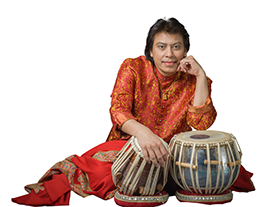
sitar surbahar tabla